HIGHGATE CEMETERY
To walk Highgate is to move through a different state of matter. The air itself seems thick with time, clinging like ivy to the stone. I came here with a specific intention: to see the world beyond the visible spectrum, through the lens of a camera converted to capture infrared light. Under this strange new sun, the familiar world falls away, and another, altogether more spectral, emerges.
The camera’s eye renders the familiar uncanny. The deep greens of the ivy and yew, so characteristic of this place, bleach to a skeletal, spectral white. The sky, a typical London grey, deepens to a dramatic, near-black canopy. It is a world inverted, a photographic negative of reality. The stone angels, weathered by a century and a half of rain and frost, take on a new life in this light. The marble, usually so solid and final, becomes translucent, glowing as if lit from within. They are no longer mere memorials but seem to be on the verge of movement, their carved wings ready to beat the thickened air.
I followed the winding paths, stepping over the heave and buckle of roots that have long since paid no heed to the human order imposed upon them. The ground here is a mazy archive of stories, a place of slow, silent decay and even slower remembrance. The infrared lens reveals the hidden energies of this landscape, the life that persists in the chlorophyll of the leaves, now rendered in ghostly white against the dark, absorbing stone of the tombs.
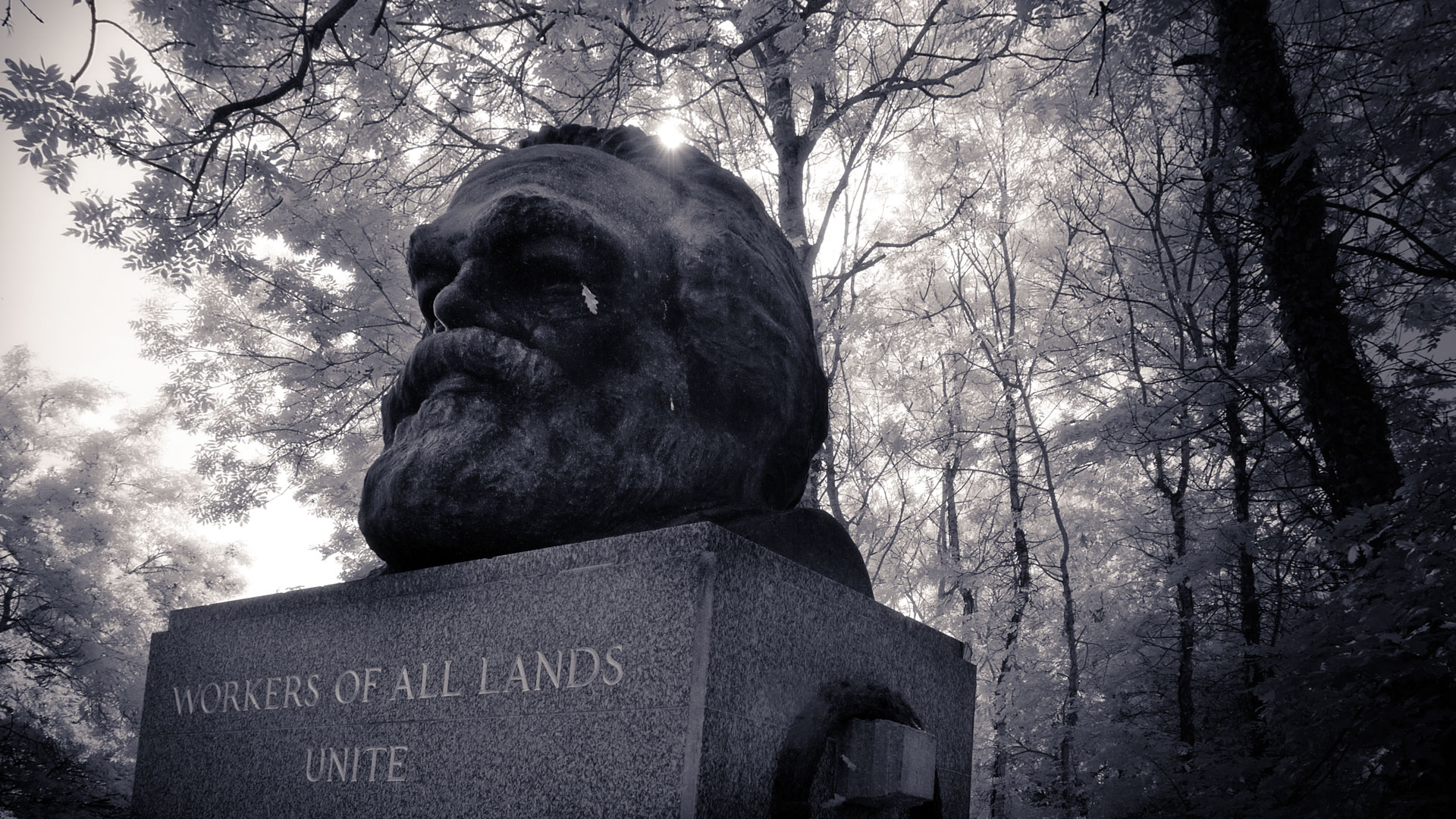
And then, I came to him. The great, brooding head of Karl Marx, a monument that has gathered to it so much history, so much anger and adoration. It is a place of pilgrimage, a site of defiance. But today, nature had added its own quiet commentary. A single oak leaf, turned to rust by the autumn, had fallen and settled on the cold bronze of his face. It rested just below his right eye, its pointed tip catching the light. From a distance, it looked for all the world like a tear, a single, bronze-hued drop of sorrow shed for a world that never quite came to be. The camera captured the scene: the dark, imposing bronze, the ethereal white of the surrounding foliage, and that one, small, poignant detail. A tear of oak, a lament from the ancient wood, for the man of iron and ideas.
Leaving Highgate, the world of normal light felt thin, washed out. The infrared eye had shown me a different truth: a world where stone breathes, where leaves weep, and where the past is not dead, but merely sleeping, waiting for a different kind of light to reveal its dreams.